
Internal radii in CNC machining affect part manufacturability, tool selection and production time. They are particularly important in pockets, slots and other recesses where the cutting tool must reach internal corners.
An excessively small radius may require the use of a small-diameter milling cutter, make it more difficult to maintain accuracy and increase machining costs. Therefore, radius size should be considered as early as the component design stage.
Table of Contents
Why Are Internal Radii Important in CNC Machining?
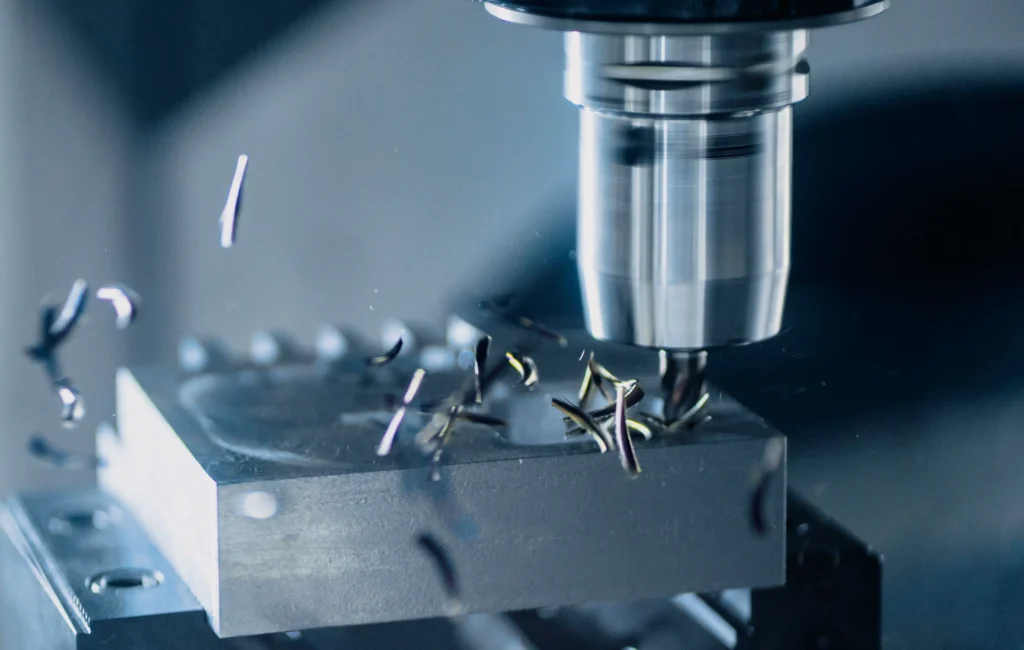
During CNC milling, material is removed using a rotating cutting tool. Due to its geometry, a standard end mill cannot produce a perfectly sharp internal corner in the machining plane. A radius remains at the intersection of two walls, determined primarily by the radius of the cutting tool.
This is particularly important when machining rectangular pockets, slots and internal recesses. The smaller the radius specified in the technical documentation, the smaller the diameter of the milling cutter that may be required.
However, the feasibility of machining a specific radius depends not only on the tool diameter but also on the part geometry, the depth of the machined area and the cutting conditions.
What Determines the Minimum Achievable Internal Radius?
The minimum internal radius achievable in CNC machining depends primarily on the tool diameter, accessibility of the machined surface and cutting conditions. These factors must be considered together, as even a correctly selected milling cutter may not always produce the required geometry while maintaining the specified accuracy.
At SIM Gdynia, assessing the manufacturability of such features is part of process planning and involves reviewing technical documentation, selecting cutting tools and evaluating limitations arising from the part geometry.
We discuss the importance of this stage for the entire manufacturing process in greater detail in the article “From documentation to stable production – the work of a technologist at SIM Gdynia”.
Cutting Tool Diameter and Geometry
The main limitation when milling internal corners is the diameter of the milling cutter. Smaller radii require tools with correspondingly smaller diameters. However, such tools have lower rigidity, which can make it more difficult to maintain the required accuracy.
The cutting length and geometry of the tool are also important. Tool selection should therefore take into account not only the required radius but also other geometric features of the component being machined.
Pocket Depth and Tool Accessibility
In CNC machining, producing a small internal radius becomes more challenging when it is located at the bottom of a deep pocket or in a difficult-to-access area of the part.
In such cases, a small-diameter milling cutter with a long overhang may be required. This reduces tool rigidity and increases its susceptibility to deflection during cutting.
Therefore, when assessing the feasibility of machining an internal radius, it is also necessary to consider pocket depth, the location of the machined surfaces and the risk of collisions between the tool and the workpiece.
What Problems Do Excessively Small Internal Radii Cause in CNC Machining?
Excessively small internal radii can make a part difficult to manufacture, even when the rest of its geometry is relatively simple.
The most common challenges relate to tool stability, maintaining the required accuracy and increased production time. Corners located in deep or difficult-to-access areas of the component are particularly challenging.
Risk of Vibration, Tool Deflection and Damage
Small-diameter milling cutters are more susceptible to deflection under cutting forces. This risk increases particularly when machining deep pockets that require a longer tool overhang.
Excessive loads can lead to vibration, reduced surface quality and dimensional deviations. In some cases, there is also a risk of tool damage.
Therefore, in addition to selecting appropriate cutting parameters, it is important to inspect the resulting geometry. SIM Gdynia has over 800 measuring instruments that support the verification of dimensions and geometric features of manufactured components.
Longer Machining Times and Higher Production Costs
Producing small internal radii in CNC machining may require less aggressive cutting parameters, additional tools and a greater number of machining passes.
In many cases, most of the material is removed using a larger-diameter milling cutter, while a smaller tool is used only to finish the corners. This requires an additional operation and increases machine time.
Therefore, an internal radius that is not critical to the component’s function should not be unnecessarily reduced. Even a small adjustment to its size can simplify machining and reduce production costs.
How to Design Internal Radii for CNC Machining?
During the design stage, internal radii should be selected according to the structural and functional requirements of the part. Where its function permits, larger radii allow the use of more rigid cutting tools and improve cutting conditions.
Pocket depth and corner accessibility are also important. It is worth determining whether all corners require the same radius, as varying the geometry can simplify machining.
If a small radius is required due to the component’s function or the need to accommodate mating parts, the manufacturing process must be adapted to these requirements.
When design requirements limit the possibility of modifying the radius, selecting an appropriate manufacturing process becomes particularly important. SIM Gdynia operates over 100 CNC machine tools, enabling the assessment of manufacturing options for components with diverse geometries and technical requirements.
How Does the Specification of Internal Radii Affect CNC Machining Preparation?
Technical documentation should clearly specify the required internal radii and their tolerances where they are important to the component’s function.
During production planning, it is important to determine which radii must be machined to a specified accuracy and where larger radii are permissible. This makes it possible to select appropriate tools, plan machining operations and assess part manufacturability.
Correct interpretation of technical documentation is particularly important for components containing deep pockets and difficult-to-access corners. We discuss this topic in greater detail in the article “CNC Machining Based on Customer Documentation – What Is Required to Prepare Production?”.
Summary
Internal radii affect tool selection, accuracy and CNC machining time. Excessively small radii may require small-diameter milling cutters, additional operations and less aggressive cutting parameters.
Therefore, both the component’s function and its manufacturability should be considered during the design stage. Appropriately selected radii and clearly defined requirements in the technical documentation help reduce the risk of manufacturing problems.
Does your part feature small internal radii or difficult-to-access surfaces? Contact us to discuss your manufacturing options.