
In modern industrial production, the CNC machining process does not begin when the spindle is started, but much earlier – at the raw material quality control stage.
At SIM Gdynia, we use spectrometric analysis, which is a key link here and guarantees that the chemical composition of the delivered metal is 100% compliant with the metallurgical certificate.
In this way, we eliminate the risk of introducing raw material with lower strength parameters into the production process, ensuring that the material meets the exact specifications required in our customer’s design.
What is spectrometric analysis of materials?
At our CNC machining facility, we do not rely solely on suppliers’ paper documentation, because the reliability of raw materials is the foundation of safety.
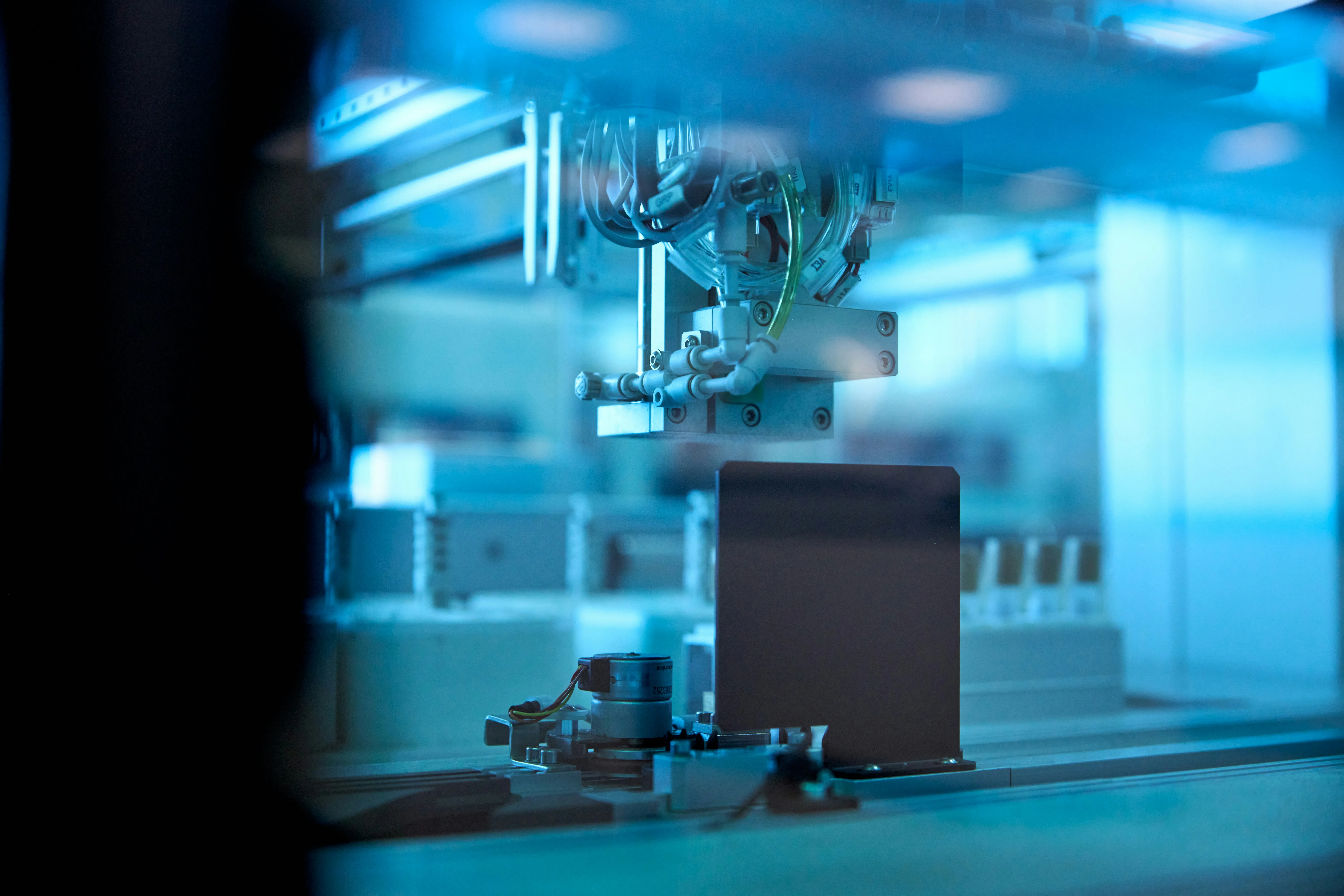
We verify every material relevant to the project using a stationary SPECTROMAXx spectrometer, which utilises optical emission spectrometry (OES) technology.
This process involves generating a spark between the electrode and the metal sample being tested, which leads to the emission of light of different wavelengths. The device’s optical system, equipped with high-resolution sensors, analyses this spectrum, allowing the full chemical composition of the alloy to be precisely determined within a few seconds.
Thanks to the device’s advanced tenth-generation optics, we can define not only the content of the main elements, such as carbon, chromium and nickel, but also trace amounts of phosphorus, sulphur and nitrogen.
At SIM Gdynia, based on over 45 years of experience, we know that it is these microelements that determine whether the material will retain its weldability and corrosion resistance in extreme operating conditions.
3 key reasons for testing the chemical composition of materials in CNC machining
Success in positioning product quality is not a matter of chance, but of a rigorous process. Material verification is standard practice in professional CNC machining because it helps to:
- Eliminate material errors:
304 and 316 steels look identical, but their chloride resistance is diametrically different. Spectrometry catches logistics errors at steel mills before production even begins. - Safety in critical industries:
In the defence and medical sectors, confirmed chemical composition is the basis for final product certification. - Optimisation of cutting processes:
The actual hardness and structure of the material, resulting from its composition, allows for precise selection of CNC machine operating parameters, which shortens lead times, improves quality and optimises costs.
Information architecture and security – how does the verification process affect the final price?
Many decision-makers wonder whether additional testing of the chemical composition of materials increases the unit cost of a part.
Yes, but the cost of testing is negligible compared to the losses resulting from the production of a series of 1,000 defective components made of the wrong alloy.
At SIM Gdynia, we make sure that the most important control processes are not “hidden deep” in the production structure, but are an integral and easily accessible part of it.
You can read more about the device we use in our production plant in the article: “SpectroMaxx spectrometer – what it is and how it revolutionises the testing of the chemical composition of metals“.
The most common mistakes in material selection and how to avoid them
Errors in the selection of metal grades can have disastrous consequences for business. The most common problem is ignoring the so-called “material gap” – a situation in which the designer assumes steel parameters that are not 100% reproducible by commercially available alloys.
Regular technical audits of the raw material allow us to detect these discrepancies at an early stage.
Another mistake is not taking into account finishing processes, such as anodising or hardening, which react differently depending on the precise concentration of alloying additives.
Spectrometric analysis gives us the certainty that these processes run smoothly.
Summary
Verification of chemical composition is the foundation of modern CNC machining.
At SIM Gdynia, we combine traditional craftsmanship with technology to deliver components of proven quality.
Thanks to spectrometry, our customers in the automotive, defence, medical and energy industries can be sure that every gram of metal meets their stringent standards.
Do you need safe mechanical components with a material guarantee for your next project? Consult our engineers.